

Who was Bishnu Prasad Rabha?
Bishnu Prasad Rabhaalso known as Kalaguru, was one of the greatest personalities of Assam. He was a poet, singer, dancer, actor, painter, writer, and freedom fighter. Because he was talented in so many fields, people called him the “Leonardo da Vinci of Assam.” Rabha worked hard to protect Assamese art, music, and culture, and he also fought for the freedom and rights of the people.
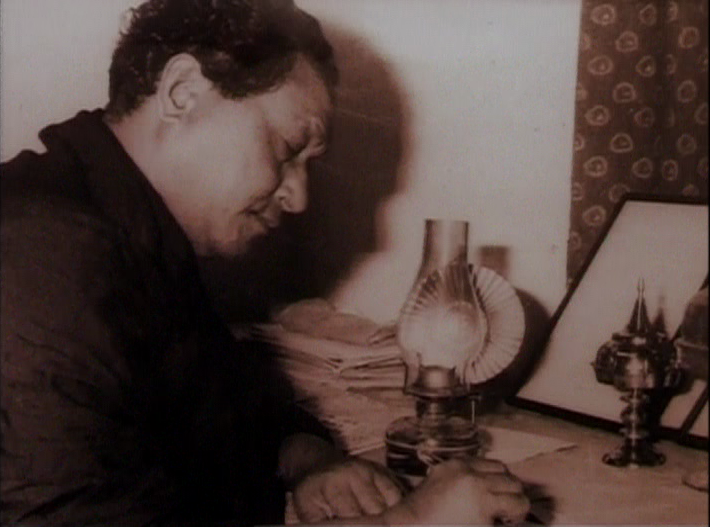
At a Glance — Quick Revision Facts
| Particulars | Details |
|---|---|
| Full Name | Bishnu Prasad Rabha |
| Date of Birth | 31 January 1909 |
| Place of Birth | Dhaka, Bengal Presidency, British India |
| Date of Death | 20 June 1969 (Tezpur, Assam) |
| Cause of Death | Cancer |
| Father | Gopal Chandra Rabha (Mosahary) — British Police Officer |
| Mother | Gethi Mech (Gethi Das) |
| Hometown / Settled | Tezpur, Assam |
| Title | Kalaguru (Master of the Arts) |
| Title Conferred By | Dr. Sarvepalli Radhakrishnan at Varanasi (Kashi Hindu University, 1939/1940) |
| Also Called | Sainik Silpi (Soldier-Artist) |
| Political Party | Revolutionary Communist Party of India (RCPI) — joined 1945/1946 |
| Ideology | Marxism / Communism; initially Gandhian |
| Famous Slogan | “Haal Jaar Maati Taar” (Land belongs to those who till it) |
| Rabha Divas | 20 June every year (his death anniversary) |
| Award in his honour | Kalaguru Bishnu Prasad Rabha Award (by Govt. of Assam) |
| Memorial | Bishnu Rabha Smriti Udyan, banks of Brahmaputra, Tezpur |
| “I am fighting for a revolution from the realm of necessity to the realm of freedom.” — Bishnuprasad Rabha |
Bishnu Prasad Rabha believed that true freedom meant more than freedom from British rule. He wanted people to live free from poverty, unfair treatment, and social problems. During his life from 1909 to 1969, he showed that art and social work can go together. Through music, literature, and public movements, he worked for the people of Assam and India.
For APSC and other Assam government exams, Kalaguru Bishnuprasad Rabha is an important topic in Assam History, Culture, and Famous Personalities. This article explains his early life, education, literary works, political activities, and the great legacy he left behind.
Early Life and Educational Background
Where Was Bishnu Prasad Rabha Born?
Bishnu Prasad Rabha was born on 31 January 1909 in Dhaka, which was then a part of British India and is now in Bangladesh. His father, Gopal Chandra Mosahary, worked in the British Police and belonged to the Bodo-Kachari community. His mother’s name was Gethi Mech, also known as Gethi Das.
He lost his mother when he was very young. After that, his father gave him to a teacher from the Rabha community to take care of him. The Rabha family loved and guided him like their own child. To show his respect and gratitude, Bishnuprasad later started using “Rabha” as his surname. This name later became famous across Assam because of his great work in art, culture, and society.
Education
Bishnu Prasad Rabha began his early education in Dhaka in the Bengali medium. Later, his family moved to Assam, where he studied at Tezpur Government High School. Tezpur became a very special place in his life, as it deeply influenced his love for Assamese culture and art.
For higher studies, he went to Kolkata and appeared for the ISC examination from St. Paul’s Cathedral Mission College. After that, he joined Ripon College. But because he took part in activities against British rule, he faced pressure from the British government and had to leave the college. Later, he studied at Victoria College in Koch Behar, but even there, his political activities and police raids on his hostel disturbed his studies.
He also studied for some time at Karmail Academy in Rangpur. In the end, he could not complete formal education. However, he did not stop learning. He became a self-taught scholar and gained deep knowledge in music, literature, art, anthropology, and performance.
The Title “Kalaguru” — How and When?
This is one of the most frequently asked questions in APSC examinations. The title Kalaguru, meaning “Master of the Arts” or “Guru of the Arts,” was conferred upon Bishnuprasad Rabha by Dr. Sarvepalli Radhakrishnan, the eminent philosopher who later became the first Vice-President and second President of India.
| KEY EXAM FACT: The title ‘Kalaguru’ was conferred upon Bishnuprasad Rabha by Dr. Sarvepalli Radhakrishnan at Varanasi (Kashi Hindu University) after witnessing his awe-inspiring Tandava dance performance. Noted dancer Uday Shankar was also present and was greatly fascinated by the performance. |
In 1939, Bishnu Prasad Rabha went to Kashi (Varanasi) and visited Banaras Hindu University to present the Kamrupi dance form and study classical music. There, he performed dances based on Krishna Leela, Dasavatar, and Tandava during a cultural event.
His powerful performance impressed Dr. Sarvepalli Radhakrishnan, who was then the Vice-Chancellor of the university. He was so deeply moved that he gave Rabha the title “Kalaguru.” The famous dancer Uday Shankar was also present and even expressed interest in learning the Tandava dance from him.
Because of his strong role in both art and revolution, Marxist and left-wing thinkers also called him “Sainik Silpi,” meaning Soldier-Artist.
Artistic and Cultural Contributions
Music — Bishnu Rabha Sangeet
Music was the soul of Bishnu Prasad Rabha’s existence. He composed over 100 songs that cover an extraordinary range of themes — tributes to Mother Nature, the exploitation of peasant masses under colonialism, revolts of tea garden workers, love for the motherland, and the aspiration for social equality. These compositions are collectively and officially known as Bishnu Rabha Sangeet (or Rabha Sangeet), a distinct genre of Assamese music.
He was also one of the finest singers of Borgeet — the devotional compositions of the saint-scholar Srimanta Sankaradeva. Rabha learnt Borgeet deeply and gave the genre renewed relevance for the modern era. His singing style carried both spiritual depth and revolutionary fire.
- Composed more than 100 original songs
- Songs collectively called Bishnu Rabha Sangeet — a recognised genre
- Themes: nature, peasant struggles, workers’ revolts, love, patriotism, social justice
- Among Assam’s finest Borgeet singers
- Rabha Sangeet features prominently in cultural competitions across Assam
Dance
Bishnu Prasad Rabha was a master of multiple classical and folk dance forms. His Tandava — the cosmic dance of Lord Shiva — was of such transcendent quality that it earned him the Kalaguru title. He also performed Ojha-Pali, Kaliya Daman, and dance-dramas based on Dasavatar and Krishna Leela. He introduced Japi dance into Bihu, drawing inspiration from tribal dance forms like Khofri Sibnai Mwsanai, enriching the folk tradition.
- Expert in Tandava dance of Lord Shiva
- Performed Ojha-Pali, Kaliya Daman, Dasavatar, Krishna Leela dances
- Introduced Japi dance into Bihu, inspired by tribal dance traditions
- Revived and promoted Kamrupi classical dance forms
Theatre and Drama
Bishnuprasad Rabha was deeply associated with the theatre movement of Assam. He authored 26 plays, many of which were dance-dramas carrying powerful themes of social commentary and nationalist fervour. He was a regular performer at the historic Ban Theatre of Tezpur — one of the oldest cultural institutions of Assam — which remains synonymous with Rabha’s theatrical legacy.
He was a versatile actor who never used his talent for commercial gain. Despite strong ties with the art world of Kolkata and Bombay, he chose to remain in Assam and use theatre as a tool to educate and mobilise the masses. His acting prowess helped him move in disguise during the armed struggle as well.
- Authored 26 plays, including dance-dramas
- Notable play: Gengeni Rengeni
- Associated with Ban Theatre, Tezpur (one of Assam’s oldest theatres)
- Used theatre as a medium of mass education and social awakening
Cinema
Bishnu Prasad Rabha made a historic contribution to Assamese cinema. He worked with Jyoti Prasad Agarwala in Joymoti (1935), the first Assamese film ever made. In this film, he also acted and helped in shaping its artistic style. He is also said to have introduced the Japi dance into Bihu performances, which later became an important part of Assamese culture.
He also acted in Era Bator Sur (directed by Bhupen Hazarika) where he played the role of Syem, composed music for the film Siraj, and was associated with film direction as well. Despite opportunities in Bollywood, he never left Assam for commercial success.
- Assisted Jyoti Prasad Agarwala in Joymoti (1935) — Assam’s first-ever film
- Music composer for the film Siraj
- Actor in Era Bator Sur (directed by Bhupen Hazarika)
- Recognised as a film director as well
Painting
Rabha was also an accomplished painter. He created what is today the most popular imaginary portrait of Srimanta Sankaradeva — the revered saint-scholar of Assam. He also painted portraits of Gods and Goddesses. His visual art, like all his work, served cultural and spiritual purposes rather than commercial ones.
| EXAM NOTE: The most popular imaginary portrait of Srimanta Sankaradeva is the one painted by Bishnuprasad Rabha. This is a commonly tested fact in APSC exams. |
Literary Works
Beyond the performing arts, Bishnuprasad Rabha was a serious scholar, writer, and anthropologist. His literary output spanned multiple genres — fiction, drama, academic research, and political writings — all deeply rooted in his Marxist ideology and his love for the indigenous communities of Assam.
| Work | Significance |
|---|---|
| Bano Kobang (Bane’ Ke’bang) | His masterpiece. First-ever anthropological study on the indigenous communities of Assam, documenting their life-worlds, traditions, and philosophies. |
| Mising Koneng (Mising Koynege) | Explores the life and culture of the Mising community of Assam. |
| Sonpahi | Reflects his communist ideology; portrays peasant and working-class life. |
| Axomiya Kristir Hamuh Abhakh | A survey/overview of Assamese culture and traditions. |
| Atit Axom (Oitit Axom) | A study of ancient/historical Assam. |
| Hiyar Pung, Sapon Kuwali, Kuri Bachar Jail, Mamir Har, Banua Panchayat, Krishak | Stories, plays and novels steeped in communist ideology, depicting the struggles of common people. |
An important linguistic contribution: Rabha argued that the Assamese language has tribal roots — a position that directly countered Dr. Banikanta Kakati’s widely accepted theory of Indo-Aryan origin. This linguistic stance reflects his deep commitment to the indigenous heritage of Assam.
Political Life and Freedom Struggle
Early Gandhian Phase
In his student years, Bishnu Prasad Rabha was drawn to the ideology of Mahatma Gandhi and the Congress Party. He actively participated in the Non-Cooperation Movement led by Gandhi in 1930. His anti-British activities during this period led to his transfer from Ripon College and ultimately to the abandonment of formal education — a sacrifice he made willingly for the cause of freedom.
Shift to Marxism
Over time, Rabha grew disillusioned with the Indian National Congress, which he came to view as the party of the bourgeoisie — indifferent to farmers, the poor, and the downtrodden. He was drawn increasingly towards Marxist and Communist ideology. During World War II, he left the Communist Party of India (CPI) when the CPI chose to collaborate with the British against the Fascist Axis — a decision Rabha found unacceptable.
In 1945/1946, he formally joined the Revolutionary Communist Party of India (RCPI), an organisation committed to armed revolution. He is called Sainik Silpi by Marxists for his active participation in the armed struggle led by the RCPI.
August 15, 1947 — The Black Flag Protest
| On 15 August 1947, while the nation celebrated independence, Bishnuprasad Rabha led a black flag protest at Dighali (also referred to as Tihu), boldly declaring: “Ye azadi jhootha hai” (This independence is false). He believed the transfer of power was merely a change from white rulers to brown rulers, with no real change for the poor. He was arrested for this act of defiance. |
After his release, Rabha launched an armed struggle in the northeastern region (then part of Greater Assam) to ignite a broader people’s revolution. It was during this underground period that he encountered fellow cultural-political thinkers including a young Bhupen Hazarika, whom he met in a small hut at the Nilachal Hills in Guwahati.
The Iconic Poem: The Two Goats
During his time at Victoria College in Koch Behar, Rabha wrote a famous poem that was widely circulated:
| “There are two sacrificial goats in the state — one black, the other white; if you want the best for the people, then sacrifice both.” (Duiti pathar boli dao) — This poem warned that both British colonialism and the Indian elite that was set to inherit power were equally inimical to the interests of the common people. |
Land Donation
True to his ideals, Bishnu Prasad Rabha donated an ancestral estate of 2,500 bigha of land — received from the British Government — to the peasants. His slogan “Haal Jaar Maati Taar” (The land belongs to those who till it) was not just rhetoric; it was lived reality. Notably, the present-day Tezpur University stands on land donated by Rabha.
IPTA Presidency
In 1951, after the death of Jyoti Prasad Agarwala, Bishnuprasad Rabha was elected as the President of the Assam branch of the Indian People’s Theatre Association (IPTA) — a progressive cultural organisation linked with the Left movement. This role further cemented his position as the foremost cultural-political figure of Assam.
Legacy, Memorials and Honours
Bishnu Rabha Divas — 20 June
Every year, 20 June is observed as Bishnu Rabha Divas (Rabha Divas) across Assam. This date marks the anniversary of his death on 20 June 1969, when he succumbed to cancer in Tezpur. The day is commemorated with cultural programmes, seminars, and tributes that celebrate his life and recall his ideals.
| EXAM FACT: Bishnu Rabha Divas is observed on 20 June every year across Assam to mark his death anniversary. |
Kalaguru Bishnu Prasad Rabha Award
The Government of Assam has instituted the prestigious Kalaguru Bishnu Prasad Rabha Award (also called Bishnu Rabha Bota) to honour individuals who make outstanding contributions in the cultural, musical, and artistic spheres of Assam. The award carries a cash prize of Rs 1,00,000 along with a citation and gifts. It is presented at a function organised by the Directorate of Cultural Affairs.
Bishnu Rabha Smriti Udyan
The Bishnu Rabha Smriti Udyan is a memorial park established in honour of Kalaguru on the banks of the Brahmaputra River near Tezpur, adjacent to the Bhairabi Temple. The initiative was started by his son Hemraj Rabha and was later taken over by the Government of Assam. The park contains Rabha’s cremation spot and has sculptures depicting his iconic works on its walls. It serves as a site of pilgrimage for admirers of his legacy from across Assam.
Multicultural Vision
Bishnu Prasad Rabha dreamt of a multicultural, inclusive Assam where no community was marginalised. He mastered almost all the languages and dialects of Assam, including those of its indigenous tribal communities. His work, Bano Kobang is the first anthropological study of Assam’s ethnic communities. He also translated the famous revolutionary anthem The Internationale into Assamese — symbolising his global solidarity with the oppressed.
He was a great mass mobiliser. His oratory, his songs, and his presence could move audiences of any background. He is considered alongside Jyoti Prasad Agarwala and Sankar Barua as one of the greatest mobilisers of rural masses during the freedom movement.
Rabha’s Connections with Other Icons
| Person | Connection with Bishnuprasad Rabha |
|---|---|
| Jyoti Prasad Agarwala | Rabha assisted in making Joymoti (1935), Assam’s first film. After Jyoti Prasad’s death (1951), Rabha became IPTA Assam president. Shared cultural-revolutionary vision. |
| Bhupen Hazarika | Rabha played Syem in Bhupen Hazarika’s Pratidhwani. They met as like-minded revolutionaries at Nilachal Hills during Rabha’s underground period. |
| Dr. Sarvepalli Radhakrishnan | Conferred the title Kalaguru on Rabha at Kashi Hindu University (Varanasi) after witnessing his Tandava dance. |
| Uday Shankar | Famous dancer Uday Shankar was so fascinated by Rabha’s Tandava that he expressed a desire to learn it from Rabha. |
| Srimanta Sankaradeva | Rabha was among Assam’s finest Borgeet singers; he also painted the most popular imaginary portrait of Sankaradeva. |
Previous Year Exam Questions & Practice MCQs
Frequently Tested Facts
- Who conferred the title Kalaguru on Bishnu Prasad Rabha? → Dr. Sarvepalli Radhakrishnan
- Where was Bishnuprasad Rabha born? → Dhaka, Bengal Presidency (now Bangladesh)
- On which date is Bishnu Rabha Divas celebrated? → 20 June
- What is the famous slogan of Bishnuprasad Rabha? → Haal Jaar Maati Taar
- What is Assam’s first film in which Rabha assisted? → Joymoti (1935) by Jyoti Prasad Agarwala
- What is Rabha’s masterpiece literary work? → Bano Kobang (first anthropological study of Assam’s indigenous communities)
- Which party did Rabha join in 1945/46? → Revolutionary Communist Party of India (RCPI)
- What did Rabha do on 15 August 1947? → Led a black flag protest declaring independence was false
- How much land did Rabha donate to peasants? → 2,500 bigha of ancestral land
- What university stands on land donated by Rabha? → Tezpur University
- Who became IPTA Assam president after Jyoti Prasad Agarwala’s death? → Bishnuprasad Rabha (in 1951)
- Which famous portrait by Rabha is most popular? → Imaginary portrait of Srimanta Sankaradeva
- The Tandava dance of which deity did Rabha master? → Lord Shiva
- For what is Rabha called Sainik Silpi? → His dual role as cultural artist and armed revolutionary (RCPI)
Practice MCQs
Q1. Bishnu Prasad Rabha is often called the ‘Leonardo da Vinci of Assam’ because:
- A) He was born in Italy
- B) He had multifaceted contributions in arts, music, literature, dance, and activism
- C) He was a painter only
- D) He received an international award
Answer: B
Q2. The Bishnu Rabha Smriti Udyan is located:
- A) On the banks of the Barak River near Silchar
- B) In Guwahati near Kamakhya Temple
- C) On the banks of the Brahmaputra near Tezpur, adjacent to Bhairabi Temple
- D) In Jorhat near Majuli
Answer: C
Q3. Which revolutionary anthem did Bishnu Prasad Rabha translate into Assamese?
- A) Internationale
- B) Jana Gana Mana
- C) Vande Mataram
- D) Red Flag
Answer: A
Q4. Bishnu Prasad Rabha adopted the surname ‘Rabha’ because:
- A) It was his mother’s family name
- B) He was born into the Rabha tribe
- C) He was raised by a teacher from the Rabha community after losing his mother
- D) It was given to him by Sarvepalli Radhakrishnan
Answer: C
Why Bishnu Prasad Rabha Matters
Bishnu Prasad Rabha was not simply an artist or a politician. He was a complete human revolution — a man who lived, breathed, sang, danced, wrote, painted, and struggled for the liberation of his people. His vision of freedom extended far beyond political independence to encompass economic dignity, social equality, and cultural pride for every community of Assam, especially its indigenous peoples.
For APSC and other state government aspirants, Rabha represents a convergence of multiple examination topics: history of Assam, cultural heritage, freedom struggle, political movements, Assamese cinema and music, and the personalities of Assam. A thorough understanding of his life is not just useful for scoring marks — it is also a window into the soul of Assam itself.
| “Let Kirtan, Dasam, and Namghosa be our valour; let naat, geet, and borgeet be the trumpet of our battle.” — Bishnuprasad Rabha |